


Sunday, March 24, 2013

Saturday, March 23, 2013
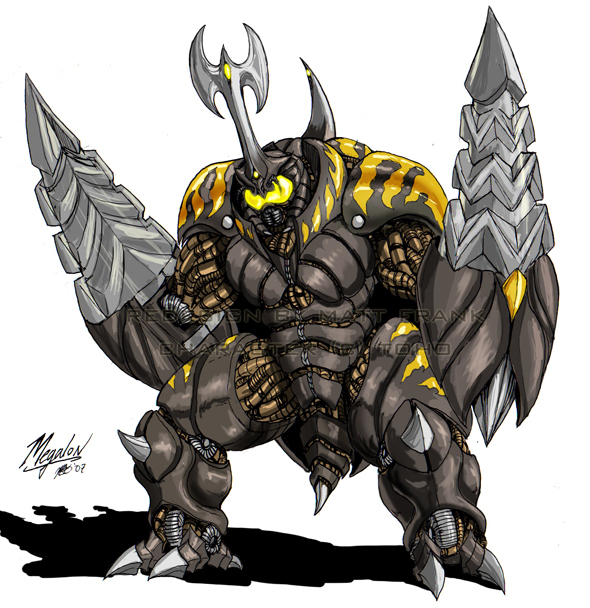
CREATURE FEATURE : Megalon
Megalon (メガロ, Megaro) is a fictional daikaiju featured in the 1973 Japanese tokusatsu film Godzilla vs. Megalon, the 13th Godzilla film produced by Toho. A cockroach/beetle-like arthropod, Megalon is the primary antagonist of the film. Godzilla vs. Megalon is one of the most popular and frequently criticized of Godzilla films, and Megalon himself plays no small part in that. Despite this, the character has remained a fixture of the popular imagination.

History
Concealed in the depths of the great lands of Seatopia, a living god sleeps. Laying in slumber within his sculpted frame, an untapped power that is unequalled coleuses. Revered as the symbol of Seatopia's Kingdom, the giant was worshipped daily. But the prayers in his name were never as strong as when the people of the undersea city challenged war against the surface dwellers. Calling and pleading with the creature, they shouted for revenge on the lands of Japan. For their ignorance, the human race will die, and their blood would run in great torrents in flashing rivers. Screaming for their savior, the god awoke and shrieked into the sacred lands. Then, in a blinding act of speed, took to the air, and began his ascension to the surface. It did not take the insect beetle long to tunnel through the layers of rocky strata, and soon he made his presence felt. Attacking with unrelenting fury, tanks, jets, and men met their fates. All being crushed at the burning standards of the rampaging creature.

The road of mankind's survival looked grim, until the intervention of a robot. Originally captured and controlled to lure Megalon to his targets, Jet Jaguar gained freedom. Striping the bonds of his Seatopian controllers, through the help of his creator, the robot grew to a massive size and prepared to battle. Assaulting the armored creature with a fury of punches and kicks, it seemed that the light at the end of the tunnel would be realized. But more tricks were yet to be revealed. Seeing that trouble could arise from their strayed robot, the king of Seatopia quickly sent word to the colony of Nebula Space Hunter M for Gigan. Adding in their struggle, the cyborg arrived on Earth and changed the tide of battle. Double-teaming the hapless Jet Jaguar, the demonic duo was about to literally shred that humanoid machine to pieces, when Godzilla arrived on the scene. Beckoned by the man made machine earlier, the leviathan turned the battle once again and for the final time. Alarmed and fearful, Gigan retreated to space, leaving his ally at the mercy of the terrestrial heroes. Bashing the god a bit more, Megalon finally was given a breather in which he took the opportunity to flee. Diving back beneath the ground, heading back to Seatopia where he has since stayed at bay.

Production
Shinji Takagi (Godzilla), Kenpachiro Satsuma (Gigan), Tsugutoshi Komada (Jet Jaguar) and Hideto Odachi (Megalon) rehearse their fight scenes in a school's gymnasium.
Godzilla Vs. Megalon was originally planned as a non-Godzilla film, a solo vehicle for Jet Jaguar, which was the result of a contest Toho had for children in mid-to-late 1972. The winner of the contest was an elementary school student, who submitted the drawing of a robot called Red Arone, which superficially resembled both Ultraman and Mazinger Z. The robot was renamed Jet Jaguar and was set to star in Jet Jaguar vs. Megalon, which pitted him against Megalon. However, after doing some screen tests and storyboards, Toho figured Jet Jaguar would not be able to carry the film on his own, either in screen appearance or marketing value, so they shut the project down during pre-production. Nearly a month later, producer Tomoyuki Tanaka called in screenwriter Shinichi Sekizawa to revise the script to add Godzilla and Gigan. To make up for lost production time, the film was shot in a hasty three weeks. The production time totaled at nearly six months, from planning to finish.
According to Teruyoshi Nakano, the Godzilla suit made for this film (known as the Megaro-Goji) was made in a week, the fastest featured Godzilla suit ever made to date. Godzilla was portrayed by stunt actor Shinji Takagi.

There are three notable deleted scenes. A scene towards the end of the film in which Antonio ponders aloud if sending Megalon to destroy the world above is really any different from what the people above are doing with atomic testing. Another is a roughly minute-long "conversation" between Gigan and Megalon that consists of quirky gestures and bodily movements. One that can be seen in the Japanese trailer has Jet Jaguar blinding Megalon with his flashlight eyes right before Megalon starts to kick at him while Gigan holds him down.
There are, interestingly, no major female characters in the movie, making this the only Godzilla film without a female lead.

Toho's popular kaiju character Anguirus appears in some stock footage from Destroy All Monsters and in two newly-filmed scenes on Monster Island. In the second new scene, Anguirus appears largely as he did in the previous film, Godzilla vs. Gigan. The first brief scene of Anguirus shows the monster without his fangs. This modification would carry over into his last appearance the next year in Godzilla vs. Mechagodzilla.


History
Concealed in the depths of the great lands of Seatopia, a living god sleeps. Laying in slumber within his sculpted frame, an untapped power that is unequalled coleuses. Revered as the symbol of Seatopia's Kingdom, the giant was worshipped daily. But the prayers in his name were never as strong as when the people of the undersea city challenged war against the surface dwellers. Calling and pleading with the creature, they shouted for revenge on the lands of Japan. For their ignorance, the human race will die, and their blood would run in great torrents in flashing rivers. Screaming for their savior, the god awoke and shrieked into the sacred lands. Then, in a blinding act of speed, took to the air, and began his ascension to the surface. It did not take the insect beetle long to tunnel through the layers of rocky strata, and soon he made his presence felt. Attacking with unrelenting fury, tanks, jets, and men met their fates. All being crushed at the burning standards of the rampaging creature.

The road of mankind's survival looked grim, until the intervention of a robot. Originally captured and controlled to lure Megalon to his targets, Jet Jaguar gained freedom. Striping the bonds of his Seatopian controllers, through the help of his creator, the robot grew to a massive size and prepared to battle. Assaulting the armored creature with a fury of punches and kicks, it seemed that the light at the end of the tunnel would be realized. But more tricks were yet to be revealed. Seeing that trouble could arise from their strayed robot, the king of Seatopia quickly sent word to the colony of Nebula Space Hunter M for Gigan. Adding in their struggle, the cyborg arrived on Earth and changed the tide of battle. Double-teaming the hapless Jet Jaguar, the demonic duo was about to literally shred that humanoid machine to pieces, when Godzilla arrived on the scene. Beckoned by the man made machine earlier, the leviathan turned the battle once again and for the final time. Alarmed and fearful, Gigan retreated to space, leaving his ally at the mercy of the terrestrial heroes. Bashing the god a bit more, Megalon finally was given a breather in which he took the opportunity to flee. Diving back beneath the ground, heading back to Seatopia where he has since stayed at bay.

Production
Shinji Takagi (Godzilla), Kenpachiro Satsuma (Gigan), Tsugutoshi Komada (Jet Jaguar) and Hideto Odachi (Megalon) rehearse their fight scenes in a school's gymnasium.
Godzilla Vs. Megalon was originally planned as a non-Godzilla film, a solo vehicle for Jet Jaguar, which was the result of a contest Toho had for children in mid-to-late 1972. The winner of the contest was an elementary school student, who submitted the drawing of a robot called Red Arone, which superficially resembled both Ultraman and Mazinger Z. The robot was renamed Jet Jaguar and was set to star in Jet Jaguar vs. Megalon, which pitted him against Megalon. However, after doing some screen tests and storyboards, Toho figured Jet Jaguar would not be able to carry the film on his own, either in screen appearance or marketing value, so they shut the project down during pre-production. Nearly a month later, producer Tomoyuki Tanaka called in screenwriter Shinichi Sekizawa to revise the script to add Godzilla and Gigan. To make up for lost production time, the film was shot in a hasty three weeks. The production time totaled at nearly six months, from planning to finish.
According to Teruyoshi Nakano, the Godzilla suit made for this film (known as the Megaro-Goji) was made in a week, the fastest featured Godzilla suit ever made to date. Godzilla was portrayed by stunt actor Shinji Takagi.

There are three notable deleted scenes. A scene towards the end of the film in which Antonio ponders aloud if sending Megalon to destroy the world above is really any different from what the people above are doing with atomic testing. Another is a roughly minute-long "conversation" between Gigan and Megalon that consists of quirky gestures and bodily movements. One that can be seen in the Japanese trailer has Jet Jaguar blinding Megalon with his flashlight eyes right before Megalon starts to kick at him while Gigan holds him down.
There are, interestingly, no major female characters in the movie, making this the only Godzilla film without a female lead.

Toho's popular kaiju character Anguirus appears in some stock footage from Destroy All Monsters and in two newly-filmed scenes on Monster Island. In the second new scene, Anguirus appears largely as he did in the previous film, Godzilla vs. Gigan. The first brief scene of Anguirus shows the monster without his fangs. This modification would carry over into his last appearance the next year in Godzilla vs. Mechagodzilla.


Will Godzilla Use Suitmation In Addition To CGI

There's been a rumor in circulation since February that TOHO, the license holders for the Godzilla franchise may potentially require that Legendary Pictures, the studio behind the 2014 Godzilla reboot, use some suitmation at some point throughout the film in addition to CGI effects.
Since Gareth Edwards' Godzilla is based on the TOHO original, unlike the 1998 TriStar Godzilla film, it is possible TOHO wishes to keep certain aspects of the iconic Godzilla films alive in this new remake. However, this rumor is unconfirmed at this point and there is no official word on Gareth Edwards' intentions of using a man in a suit in his 2014 Godzilla reboot.
Suitmation is rarely used in today's films with the over abundance of cutting edge special effects, but some movie-goers will argue that having a physical actor in a suit adds a more "realistic" feel to overall film. It ultimately depends on if this rumor is in fact true and if Director Gareth Edwards decides he wishes to continue this tradition of Godzilla movie making.


Friday, March 22, 2013


Thursday, March 21, 2013
MONSTER MUSIC : The Best of Godzilla 1954-1975

Music By: Akira Ifukube
Record Label: GNP Crescendo
Running Time: 78:44
Release: February 1998
The Best of Godzilla is a superb collection of original tracks from the scores for 15 of the sci-fi/fantasy films, from Ishiro Honda's original neo-realist masterpiece Godzilla (1954) to Terror of Mechagodzilla (1975). Akira Ifukube's music is the best of the work of several composers featured, and, fortunately, makes up the bulk of the material here. Some good parts of his original score for the original Godzilla are left out, but the essential highlights are present, as are the best moments from Ifukube's best middle-period score, the menacing music to Destroy All Monsters. The sound is high quality, a match for the far more expensive Japanese CDs of the individual soundtracks, although one notices an improvement in the recording of the '70s scores, which have richer textures and fuller tones. The scores for some of the later movies, written by Riichiroh Manabe, sound too much like pop music. The only other major flaw is the inclusion of a version of the "Godzilla" theme by Neil Norman and his band.

Godzilla (1954)
1. Footsteps FX
2. Godzilla Main Title
3. Ootojima Temple Festival
4. Japanese Army March
5. Godzilla Comes Ashore
6. Godzilla's Rampage
7. Ending
Godzilla Raids Again (1955)
Composer: Masaru Sato
8. Main Title
King Kong vs. Godzilla (1962)
9. Helicopter/Man Screams/SOS FX
10. Main Title
11. King Kong Roars FX
12. Planning King Kong's Transport
Mothra (1961)
Composer: Yuji Koseki
13. Mothra's Song
Mothra vs. Godzilla (1964)
14. Mothra FX
15. Main Title
16. Sacred Springs
Ghidorah, the Three-Headed Monster (1964)
17. Main Title/Monsters Appear In Yokohama
Invasion of Astro-Monster (1965)
18. UFO Approaches/Mosters Fight FX/Monster Battle March (Main Title)
Son of Godzilla (1967)
Composer: Masaru Sato
19. Main Title
20. Godzilla vs. Kumonga
21. Ending
Destroy All Monsters (1968)
22. Godzilla FX/Toho Mark/Main Title
23. Title Credits
24. Four Monsters Attack Tokyo
25. Destroying the Remote Control
26. Showdown on Mt. Fuji
27. Ending
All Monsters Attack (1969)
Composer: Kunio Miyauchi
28. Cute Kid Theme/Monster Fight
Godzilla vs. Hedorah (1971)
Composer: Riichiro Manabe
29. Godzilla's Fight
Godzilla vs. Gigan (1972)
30. Main Title
31. Main Title Repeat
32. Godzilla March - Record Version
By: Susumu Ishikawa, Composer: Kunio Miyauchi
Godzilla vs. Megalon (1973)
Composer: Riichiro Manabe
33. Jet Jaguar/Megalon FX
34. Main Title
35. Godzilla of Monster Island
Godzilla vs. Mechagodzilla (1974)
Composer: Masaru Sato
36. Mechagodzilla FX
37. Godzilla vs. Anguirus
38. Miyarabi's Prayer
By: Beru-Bera Lin
Terror of Mechagodzilla (1975)
39. Main Title
40. MechaGodzilla II
41. Godzilla's Entrance
42. Ending
Extra
43. Theme From Godzilla
By: Neil Norman
Subscribe to:
Posts (Atom)
